[中文版]
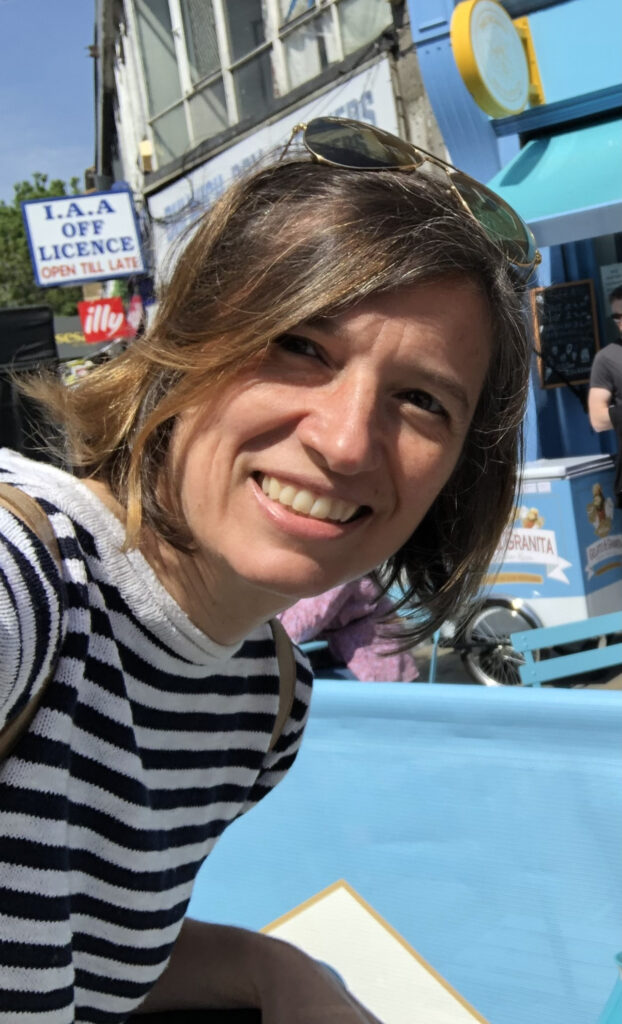
Personal Profile
Dr Arianna Ciula is the Director & Senior Research Software Analyst of King’s Digital Lab. She is experienced in digital humanities research and teaching, research management, as well as digital research infrastructures.
1. How do you define Digital Humanities?
Digital Humanities is an interdisciplinary field that studies the integration of computational methods and software engineering processes in the arts and humanities research and education as well as in the cultural heritage sector and creative practices. Increasingly, it addresses wider issues around the design and use of digital technologies and their impact on digital cultures and societies.
2. How did you become interested in DH?
As a teenager, I enjoyed scientific disciplines – math in particular – but was also fascinated by ancient cultures and societies. I was lucky in high school to be part of an experimental programme that combined classics with STEM disciplines including computer sciences. I went on to get a degree in communications studies with a specialization in technologies to then follow up with a PhD that combined manuscript studies with software-intensive research. This is when I found out that an active international humanities computing community existed; I enrolled in an MA at KCL on those topics in parallel with my PhD and became active in Digital Humanities projects and networks.
3. Tell us about one of your DH projects?
I have been involved in many projects over the years, but one I would like to highlight relates to my research on one of the methodologies of cross and inter-disciplinary collaboration which I believe is foundational in DH, namely (data) modelling. This activity has been analysed mainly from a STEM perspective but it is the research in DH that makes emerge the epistemological value of modelling: by modelling objects and phenomena into data structures we know things differently. A collaborative project which resulted in a book (Modelling between Digital and Humanities: Thinking in Practice) reflected on the topic by making emerge the importance of language in modelling as well as its pragmatic dimension (modelling is creative and contingent). I hope the book demonstrated how humanities disciplines can give an important contribution to the conceptualisation of modelling specifically and more in general to how we shape our conceptual and physical world with the design and use of digital technologies.
4. And a DH project you particularly like?
This is a project I have bene involved in only tangentially to support its funding and delivery. It is called Digital Ghost Hunt. Led by KDL Senior RSE, Elliott Hall, it was a very inventive collaboration with theatre and performance professionals, schools and pupils, cultural heritage institutions and the public. By integrating digital technologies into well designed experiences, it showcases the imaginative power of collaboration across sectors and generations and the value of thinking creatively and of tinkering with digital technologies.
介绍Arianna Ciula博士
个人简介
Arianna Ciula博士是国王数字实验主任兼高级研究软件分析师,拥有数字人文研究与教学、研究管理和数字研究基础设施方面的丰富经验。
1. 你如何定义数字人文?
数字人文是一个跨学科领域,探讨如何整合计算方法和软件工程过程于艺术、人文学科研究、教育、文化遗产部门以及创意实践中。随着技术的进步,数字人文越来越多地涉及数字技术的设计、应用,以及它们对数字文化和社会的广泛影响等诸多问题。
2. 你是如何对数字人文产生兴趣的?
在青少年时期,我对科学学科,特别是数学,有浓厚的兴趣,同时也对古代文化和社会非常着迷。在高中时,我有幸参加了一个实验项目,将古典学与包括计算机科学在内的STEM学科结合起来。随后我获得了传播学学位,专注于技术领域,并继续攻读将手稿研究与软件密集型研究相结合的博士学位。正是在这个阶段,我发现了一个充满活力的国际人文学科计算社区。我在攻读博士学位的同时,申请并参加了伦敦国王学院的数字人文硕士课程,并积极参与数字人文项目和网络。
3. 介绍一个你的数字人文项目?
多年来,我参与了许多项目,但我想特别强调一个与我研究的跨学科和跨领域合作方法相关的项目,即数据建模。在数字人文中,数据建模被视为基础性工作。这项活动主要从STEM的角度进行分析,但是数字人文的研究揭示了建模的认知论价值:通过将对象和现象建模为数据结构,我们能够以不同的方式理解事物。我们的合作项目最终出版了一本书《数字与人文学科之间的建模:实践中的思考》,这本书通过强调语言在建模中的重要性以及建模的实际维度(建模是创造性和偶发的过程),深刻反映了这个主题。我希望这本书能展示人文学科在概念建模方面的贡献,特别是在如何通过设计和应用数字技术来塑造我们的概念和物理世界。
4. 你特别喜欢的一个数字人文项目是什么?
这是一个我在资金支持和交付方面略有参与的项目,名为「数字猎鬼」。由KDL高级RSE Elliott Hall领导,这个项目展示了极具创意的合作,涉及戏剧和表演专业人士、学校和学生、文化遗产机构以及公众。通过精心设计的体验融入数字技术,它展示了跨部门和跨代合作的想象力,以及数字技术实验的创造性思维和价值。

